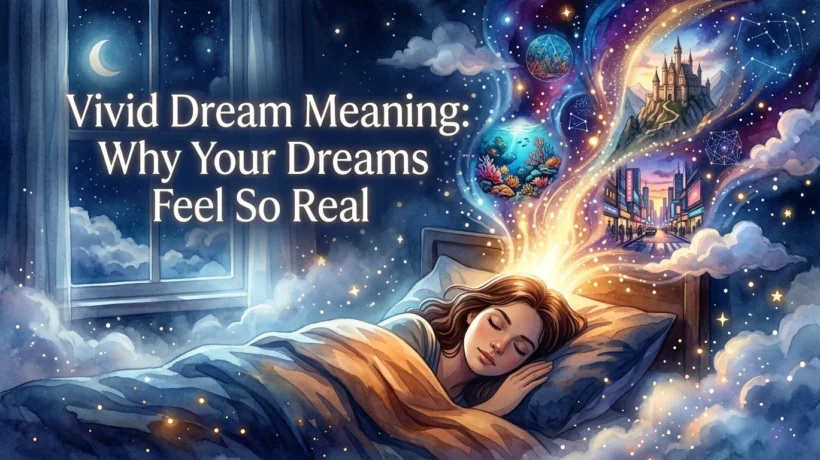
A vivid dream meaning usually points to strong emotions, mental stress, or a season of change in your life. When a dream feels sharper than normal, with clear colors, real sounds, and feelings that stay with you after you wake up, your brain is working through something important. It could be a worry from your day, a memory you haven’t processed, or a shift happening inside you.
A vivid dream is a dream that feels unusually real, detailed, and emotional. The vivid dream meaning is tied to how active your brain is during REM sleep. Stress, big life changes, certain medications, and even pregnancy can all make dreams sharper. Many people also connect vivid dreams to a spiritual awakening or a message worth paying attention to.
Not every dream leaves a mark on you. Most dreams fade within minutes. But a vivid dream sticks. You remember the exact color of a room, the words someone said, or the fear you felt while running. That kind of clarity is not random. It usually means your mind picked this dream to matter.
What Makes a Dream “Vivid”?
A dream becomes vivid when it feels closer to real life than to a normal dream. Ordinary dreams are foggy. You forget most of them within a few minutes of waking up. Vivid dreams are different.
Here is what separates a vivid dream from a regular one:
- The images are sharp and detailed, almost like watching a film.
- Emotions carry over after you wake up, sometimes for hours.
- You can recall small details, like what someone was wearing or the exact words spoken.
- The dream feels physically real, not distant or blurry.
- You wake up thinking about it long after the moment has passed.
Sleep researchers explain that dreaming happens mainly during REM sleep, the stage when brain activity looks similar to being awake. The Sleep Foundation notes that vivid dreams often occur during REM sleep because this is when the brain is most active and most dreaming takes place. When your REM sleep is longer, deeper, or disrupted, dreams tend to become more vivid.
What Causes Vivid Dreams? The Science Behind Them
Before looking at meaning, it helps to understand why vivid dreams happen in the first place. According to the Sleep Foundation, several everyday factors can make dreams more intense.
| Cause | Why It Happens |
| Stress and anxiety | Cortisol rises during stress, and this hormone has been linked to stronger dream recall |
| Sleep deprivation | Missing sleep leads to REM rebound, where the brain spends more time in REM once you finally rest |
| Pregnancy | Hormonal shifts and disrupted sleep patterns during pregnancy are linked to more vivid dreaming |
| Medications | Antidepressants, beta blockers, and some sleep aids can change REM patterns and dream intensity |
| Grief and loss | People who lose a loved one often report vivid dreams of that person soon after |
| Trauma or PTSD | Intense or repeated dreams can accompany post traumatic stress |
| Sleep disorders | Conditions like sleep apnea or REM sleep behavior disorder can fragment sleep and increase dream recall |
If you only have a vivid dream once in a while, there is usually nothing to worry about. It becomes worth mentioning to a doctor when vivid dreams happen every night, come with acting out movements during sleep, or leave you exhausted during the day.
The Psychological Meaning of Vivid Dreams
From a psychological angle, a vivid dream often reflects something your mind has not finished processing. Your brain uses sleep to sort through memories and emotions from the day. When a feeling is strong enough, whether it is fear, excitement, guilt, or love, your mind may replay it in a dream with extra intensity.
Carl Jung, the psychiatrist who developed analytical psychology, believed dreams were messages from the unconscious mind, often speaking through symbols rather than plain words. Jung’s idea was that the unconscious tries to balance what the conscious mind is ignoring. Under this view, a vivid dream is not just noise. It is your mind pointing at something you have not looked at directly while awake.
This does not mean every vivid dream carries a deep hidden lesson. Sometimes a vivid dream is simply your brain processing a stressful meeting, a hard conversation, or a big decision you are facing. The intensity comes from how strongly you felt about the event, not from a mystery waiting to be solved.
The Spiritual Meaning of Vivid Dreams
Many spiritual traditions treat vivid dreams as more than a biological event. This section reflects common beliefs and folk interpretations, not proven fact, since spiritual meaning cannot be tested the way biology can.
In several cultures, a dream that feels unusually real is seen as a sign that something important is trying to reach you. Believers describe this as your spirit becoming quieter and more open once your body is asleep, making it easier for messages, intuition, or guidance to come through.
Common spiritual interpretations include:
- A call to slow down and reflect on your current path
- A message from a loved one who has passed away
- A sign of spiritual growth or an awakening period in your life
- A nudge to trust your intuition about a decision
- A warning to pay closer attention to your health, relationships, or choices
People who follow Islamic tradition often see dreams as personal and worth self-reflection, especially when a dream leaves a strong emotional impact. This view treats vivid dreams as an invitation to pray, reflect, and consider what the dream may be pointing toward, rather than as a fixed prediction.
Whether you take this spiritual view seriously or see it as folklore, the practice behind it is the same. A vivid dream asks you to pause and think about what is happening in your inner life.
Common Vivid Dream Themes and What People Believe They Mean
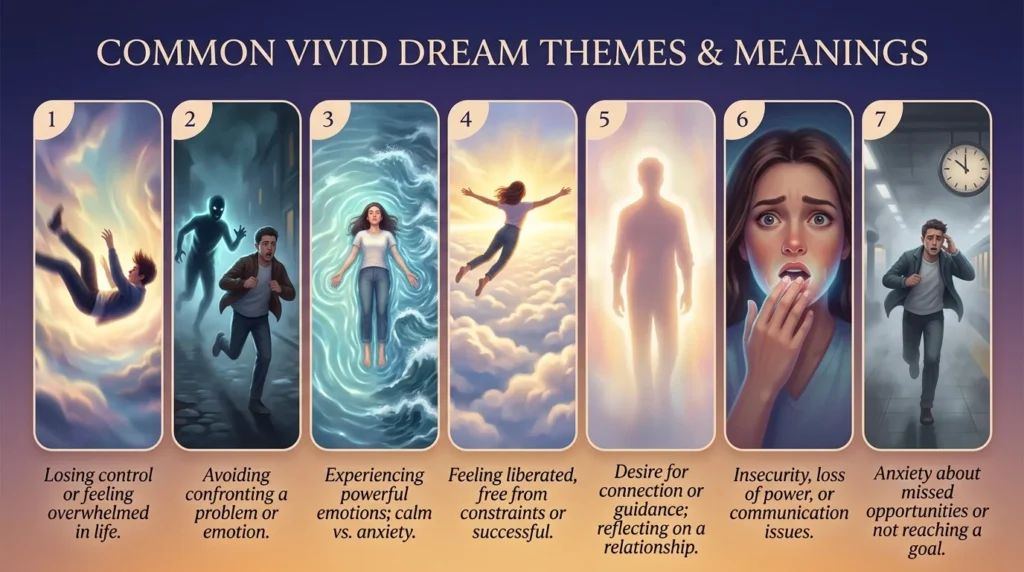
Certain images show up again and again in vivid dreams. Here is a simple breakdown of themes people commonly report and how they are usually interpreted.
| Dream Theme | Common Interpretation |
| Falling | Loss of control or fear about an unstable situation |
| Being chased | Avoiding a problem or emotion in waking life |
| Water | Emotional state, calm water suggests peace, rough water suggests turmoil |
| Flying | A sense of freedom or rising above a difficult situation |
| A deceased loved one | Unfinished grief, comfort, or a message people wish to receive from them |
| Losing teeth | Anxiety about appearance, aging, or losing control |
| Being late or lost | Stress about missing an opportunity or feeling unprepared |
These meanings are traditional interpretations passed down through dream folklore and popular psychology, not scientific findings. Two people can have the same dream and take away completely different meanings, because the context of their own life matters more than the symbol itself.
Are Vivid Dreams a Sign of Stress or Anxiety?
Yes, in many cases they are. The Sleep Foundation points out that stress raises cortisol levels, and cortisol has been connected to stronger dream recall. When your mind is carrying worry into the night, that tension often shows up as sharper, more emotional dreams.
This does not mean every vivid dream is a bad sign. Positive stress, like planning a wedding or starting a new job, can also lead to vivid dreams. The brain reacts to intensity, not just to negative feelings.
If your vivid dreams are frequent and paired with poor sleep, low energy, or constant worry during the day, it may be worth talking to a doctor or therapist. They can help you address the root cause rather than just the dreams themselves.
When Vivid Dreams Might Signal Something More
Most vivid dreams are harmless. But there are situations where they deserve medical attention.
Talk to a healthcare provider if you notice any of the following alongside vivid dreams:
- You physically act out your dreams while asleep, such as kicking or shouting
- You feel extremely tired during the day even after a full night of sleep
- You experience sudden muscle weakness or hallucinations while falling asleep
- Your vivid dreams started right after beginning a new medication
- The dreams are frequent nightmares tied to a traumatic event
These signs can point to conditions like REM sleep behavior disorder, narcolepsy, or an underlying mental health condition. A doctor can help sort out whether the cause is simple stress or something that needs treatment.
How to Reflect on a Vivid Dream
If a vivid dream stays with you, here are a few simple steps to make sense of it without overthinking:
- Write it down right after waking up, while the details are still fresh.
- Note how you felt during the dream, not just what happened in it.
- Think about what was going on in your life the day before.
- Ask what part of your waking life the dream might be connected to.
- Avoid forcing a meaning if nothing feels clear. Some dreams are simply your brain clearing out the day.
Journaling your dreams over time can also help you notice patterns, like recurring people, places, or feelings that show up when you are under pressure.
Vivid Dreams vs. Lucid Dreams: What’s the Difference?
People often mix up vivid dreams with lucid dreams, but they are not the same thing.
A vivid dream is defined by clarity and emotion. The images are sharp, the feelings are strong, and you remember it well after waking up. You are not aware that you are dreaming while it happens.
A lucid dream is defined by awareness. You know you are dreaming while it is happening, and in many cases you can influence what happens next, like choosing to fly or change your surroundings.
The two can overlap. A dream can be both vivid and lucid at the same time, but one does not require the other. You can have an extremely vivid dream and have no idea it was a dream until you wake up. You can also have a lucid dream that feels calm and hazy rather than sharp and intense.
Understanding this difference matters because the two are explored differently. Lucid dreaming is often studied as a skill people can train, using techniques like reality checks or keeping a dream journal before sleep. Vivid dreaming is less about training and more about what is happening in your body and mind, such as stress levels, sleep quality, or medication use.
Do Vivid Dreams Happen More at Certain Life Stages?
Some periods in life naturally bring on more vivid dreams than others.
- Pregnancy: Hormonal changes and frequent waking during the night are linked to more vivid and memorable dreams, especially in the later months.
- Adolescence: Teenagers go through major hormonal and brain development, which can affect sleep architecture and dream intensity.
- Grief: After losing someone close, many people report vivid dreams about that person, often within the first weeks or months.
- Major life transitions: Starting a new job, moving to a new city, or going through a breakup can raise emotional intensity, which shows up in dreams.
- Illness or recovery: Fever, infections, and recovery from surgery have all been linked to unusually vivid or strange dreams, likely tied to disrupted sleep cycles.
None of these stages guarantee vivid dreams will happen, but they raise the odds because they all involve either emotional intensity, hormonal change, or disrupted sleep, the three biggest drivers behind why dreams become vivid in the first place.
Frequently Asked Questions
What does having vivid dreams mean?
It usually means your brain is processing strong emotions, recent stress, or a major change in your life. It can also point to disrupted sleep or certain medications affecting your REM cycle.
Why do I have vivid dreams every single night?
Nightly vivid dreams are often linked to ongoing stress, sleep deprivation, medication side effects, hormonal changes, or an underlying sleep disorder. If it continues for weeks, a doctor can help identify the cause.
Are vivid dreams a sign of stress or anxiety?
Yes. Stress raises cortisol, which is linked to stronger dream recall and more emotional dream content. Both stress and excitement can increase how vivid a dream feels.
What is the spiritual meaning of vivid dreams?
Many spiritual traditions view vivid dreams as messages, warnings, or signs of personal growth. This is a belief system, not a proven fact, but it has guided how people interpret dreams for centuries.
Can medication cause vivid dreams?
Yes. Antidepressants, beta blockers, and some sleep aids are known to change REM sleep patterns, which can make dreams feel more intense or memorable.
Is it normal to remember a vivid dream for days?
It is common, especially if the dream carried strong emotion. Most memories of a dream fade with time, but an emotionally charged vivid dream can stay with you longer than usual.
Do vivid dreams mean I am not sleeping well?
Not always. Vivid dreams can happen during healthy REM sleep. However, if they come with waking up tired, gasping for air, or feeling unrested, it may point to a sleep disruption worth checking with a doctor.
Final Thoughts
A vivid dream meaning is rarely just one thing. It sits at the crossing point of biology, emotion, and personal belief. Your brain may be processing stress or a big change. Your mind may be pointing you toward something you have been avoiding. Or, if you follow a spiritual view, the dream may carry a message worth sitting with.
Instead of searching for one fixed answer, look at what was happening in your life around the time of the dream. That context, more than any symbol, usually holds the real meaning behind it.