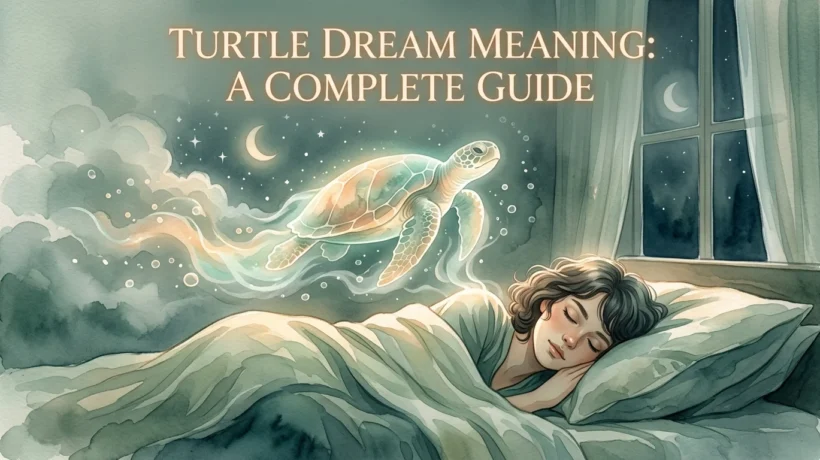
A turtle dream meaning usually points to patience, protection, and steady progress in your life. The turtle carries its home on its back and moves at its own calm pace. When one appears in your sleep, your mind often wants you to slow down, trust your timing, and guard what matters. A turtle dream’s meaning shifts a little based on the turtle’s actions, its color, and how you felt while it was near.
A turtle dream meaning usually reflects patience, protection, and steady growth. The shell points to boundaries and safety, the slow pace points to trusting your own timing, and water points to your emotions. Most turtle dreams are a positive sign of wisdom, resilience, and good fortune on the way.
Key takeaways before you read on:
- The turtle stands for patience, calm progress, and protection.
- Its shell often reflects boundaries, safety, and time to recharge.
- Water in the dream connects the turtle to your emotions and renewal.
- Many cultures read a turtle as a sign of longevity and good luck.
- How you felt in the dream is your clearest clue to its message.
Why Turtles Appear in Dreams
Turtles are ancient, gentle, and steady. They have lived on Earth for millions of years, and they thrive by moving with care. Your mind reaches for that image when it wants to speak about patience, endurance, or the need to protect yourself. A turtle rarely rushes, so it tends to appear when part of you needs to slow down and breathe.
Context guides the message every time. A turtle resting in the sun carries a calm tone, while a turtle stuck on its back carries a very different one. Before you settle on one meaning, picture what the turtle did and how you responded to it.
What Your Turtle Dream Meaning Really Points To
The turtle works as a rich symbol, so it holds several linked ideas. Its shell speaks to protection, boundaries, and the safe space you build around yourself. Its slow pace speaks to patience and trust in your own timing. When the turtle swims, water adds a layer of emotion, renewal, and cleansing. Its long life links it to wisdom, stability, and good fortune.
These meanings stay flexible, not fixed. A calm turtle usually reflects peace and steady growth. A frightened or injured turtle can reflect stress or a fear of change. Read the whole scene, and the message grows clear.
Turtle Dream Scenarios and Their Meaning
Each dreamer brings a personal story to the symbol. Still, some scenes come up again and again. The table gives you a quick read, and the sections below add depth.
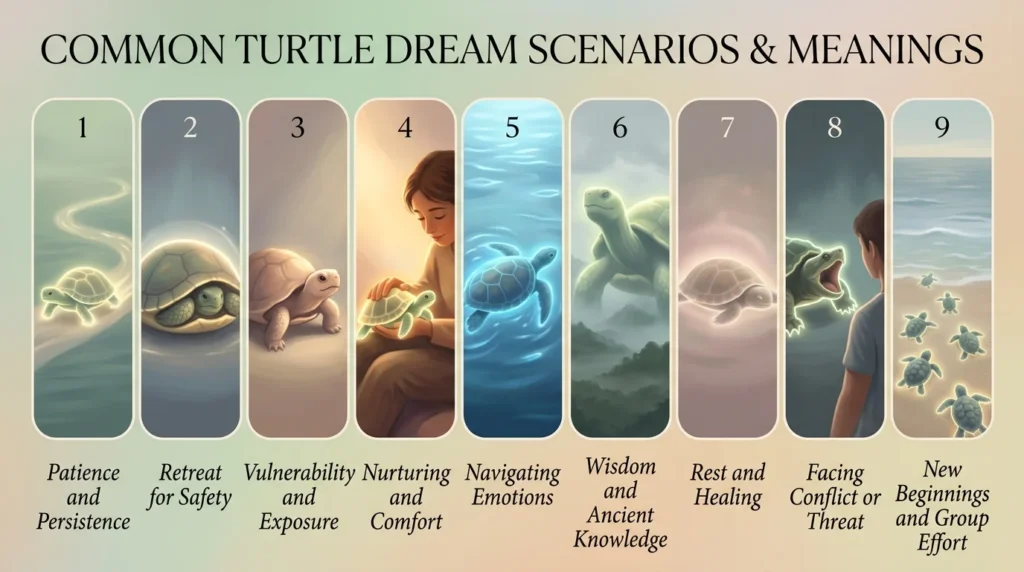
| Turtle dream scenario | What it may point to |
| A turtle moving slowly | Patience, perseverance, and steady progress |
| A turtle hiding in its shell | A need for safety, rest, or firmer boundaries |
| A turtle without its shell | Feeling exposed, open, or unprotected |
| Holding or petting a turtle | Care, trust, and nurturing a bond |
| A turtle swimming | Emotional flow, calm, and adaptability |
| A giant turtle | Strong protection, wisdom, or a big lesson |
| A dead or injured turtle | Healing needed, or a stalled sense of progress |
| A snapping turtle attacking you | Avoided conflict or a pace that feels too fast |
| Many turtles or baby turtles | Fresh starts, growth, and gentle new beginnings |
A Turtle Moving Slowly
A slow, steady turtle often mirrors your pace toward a goal. The dream can remind you that patience pays off and that progress counts even when it feels gentle. Notice your mood. Calm suggests you accept the slow climb, while frustration hints at a wish for quicker results.
A Turtle Hiding in Its Shell
A turtle that pulls into its shell points to a need for safety or rest. You may be stepping back from a busy stretch to recharge. This scene can also show that you want firmer boundaries with people or tasks that drain you.
A Turtle Without Its Shell
A shell gives the turtle its armor, so a turtle without one points to feeling exposed. The dream may reflect a moment when you feel open to judgment or unprotected. Look at where you crave more security, and give yourself that safety.
Holding or Petting a Turtle
Holding a gentle turtle often reflects care, trust, and connection. This scene can show that you want to slow down and focus on a meaningful bond. It may also mean you are nurturing a quiet part of yourself that deserves attention.
A Turtle Swimming
A turtle gliding through water tends to reflect emotional ease. Water stands for feeling, so a swimming turtle suggests you move through your emotions with grace. The dream can point to balance and a calm, adaptable state of mind.
A Giant Turtle
An oversized turtle often stands for strong protection and deep wisdom. The dream can show that a steady force supports you, or that your own resilience runs deeper than you thought. A large turtle can also mark a big lesson worth your patience.
A Dead or Injured Turtle
A hurt or lifeless turtle usually points to healing rather than loss. It can reflect tired patience, a stalled project, or a need to restore your sense of safety. Treat it as a gentle nudge to rest and rebuild your strength.
A Snapping Turtle or a Turtle Attacking You
A snapping turtle brings sharper energy. This scene can reflect a conflict you keep avoiding, or a sense that life moves faster than you like. Notice whether you stood your ground, since that choice shows how you handle pressure while awake.
Many Turtles or Baby Turtles
A group of turtles or tiny hatchlings often signals fresh starts and growth. The dream can point to new plans forming through steady effort. Baby turtles add a hopeful tone, hinting at ideas or bonds that need gentle care to grow.
What the Turtle’s Color Adds to the Meaning
Color can sharpen the turtle dream meaning. These links come from folklore, so treat them as a starting point for reflection.
| Turtle color | What it tends to add |
| Green turtle | Growth, renewal, and steady healing |
| Black turtle | Mystery, deep feeling, or a call to look within |
| White turtle | Clarity, peace, and a fresh spiritual start |
| Blue turtle | Calm, wisdom, and honest communication |
Spiritual and Cultural Meanings of Turtle Dreams
Eastern and Hindu Traditions
Eastern traditions honor the turtle as a symbol of longevity, balance, and harmony. The turtle bridges earth and water, so it often reflects a steady, grounded life. In Hindu tradition, the turtle Kurma is an avatar of the god Vishnu, a form that supports and stabilizes the world. Through this lens, a turtle dream can point to support, patience, and trust in the larger flow of life.
Native American Traditions
Many Native American traditions link the turtle to creation, protection, and connection to the Earth. Some nations even call the land Turtle Island, honoring the animal as a carrier of life. In this view, a turtle dream can reflect grounding, stability, and a call to reconnect with nature and your roots.
Turtle Dreams and the Bible
Scripture names the turtledove, a bird, rather than the reptile, so the Bible does not directly speak of turtles in dreams. Even so, many readers connect turtle symbolism to biblical themes like humility, steadfastness, and trust in divine timing. Through a faith based view, a turtle dream may feel like a call to stay patient, guard your spirit, and move forward with quiet confidence.
How the Feeling in the Dream Shapes the Meaning
The emotion you carried is your strongest guide. A calm, warm feeling often points to peace, patience, and healthy progress. A tense feeling can flag stress, a boundary, or a fear of moving too slowly. Watch the ending too. A gentle close suggests balance, while an uneasy one may show something still unsettled. Trust the mood, because your mood usually tells the truth.
How to Reflect on Your Turtle Dream
- Write down what you remember as soon as you wake, including the turtle’s color, actions, and setting.
- Note how you felt during the dream and how you feel about it now.
- Ask which part of your life needs more patience, more rest, or firmer boundaries.
- Notice whether the dream repeats, since a pattern often points to something worth facing.
- Give the dream a day or two before you decide what it means for you.
Frequently Asked Questions
Is it good luck to dream about a turtle?
Yes, a turtle dream is generally a positive sign. Across many cultures the turtle links to longevity, wisdom, and good fortune. A calm, healthy turtle often points to stability and prosperity moving toward you.
What is the spiritual meaning of a turtle in a dream?
Spiritually, the turtle stands for protection, patience, and grounding. It carries its home on its back, so it reflects self reliance and the ability to retreat when you need rest. Many read it as a guide to trust your own timing.
What is the biblical meaning of a turtle in a dream?
The Bible names the turtledove, a bird, not the reptile, so it offers no direct turtle meaning. Readers who use a faith based lens tend to tie the turtle to humility, endurance, and trust in divine timing.
What does it mean when a turtle hides in its shell in a dream?
A turtle pulling into its shell usually points to a need for safety or rest. It can reflect a wish to step back from stress or to set clearer boundaries. Often it invites you to recharge before you move ahead.
What does it mean when a turtle chases or attacks you in a dream?
A chasing or snapping turtle can reflect a conflict you keep avoiding, or a sense that life moves faster than you like. Notice how you responded, since that reaction mirrors how you face pressure while awake.
How do I stop dreaming about turtles?
You can ease repeated turtle dreams by lowering stress, keeping a steady sleep routine, and journaling the feelings behind them. When you address the need for patience or rest that the turtle points to, the dreams often settle on their own.