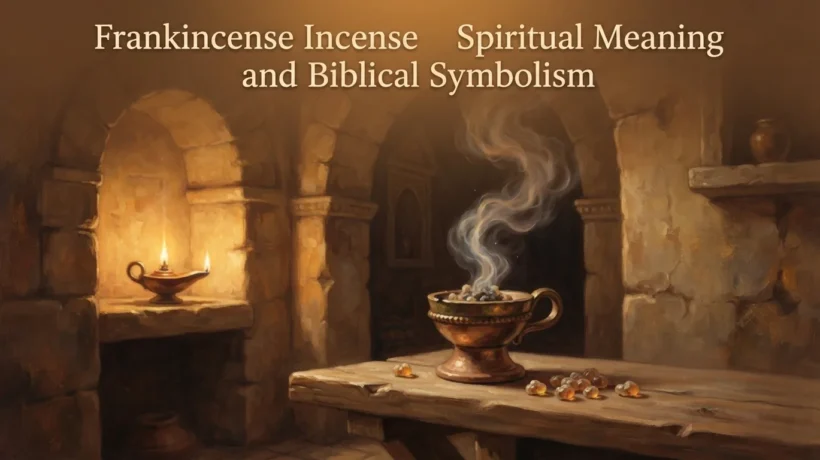
People burn frankincense during worship, meditation, and quiet reflection. Its meaning comes from the tradition and purpose behind that use. A grain offering in the Bible, incense at Mass, and a personal cleansing ritual share a fragrant material, but each has its own beliefs and history.
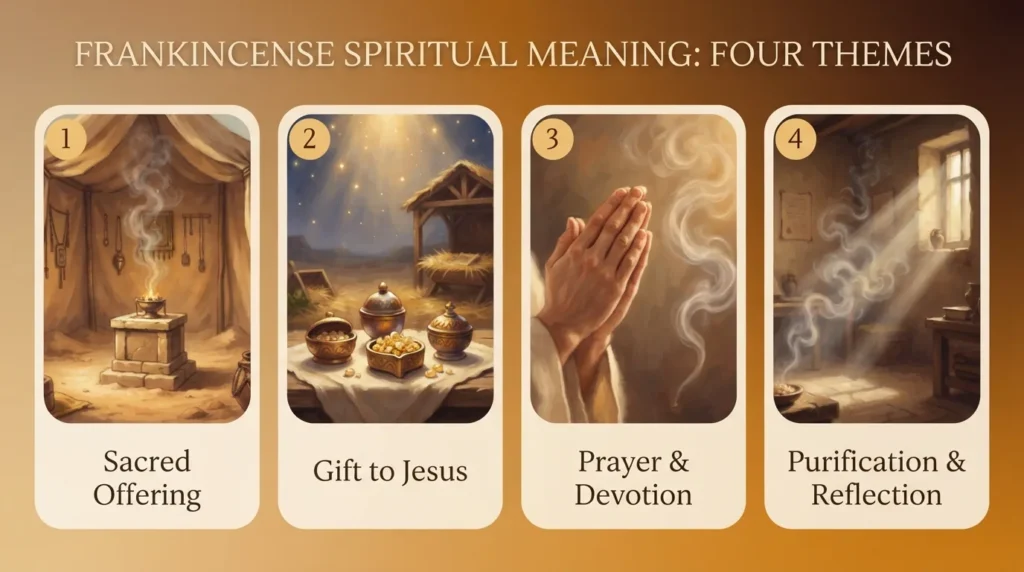
Frankincense is fragrant resin from Boswellia trees. Frankincense incense spiritual meaning includes sacred offering, prayer, purification, and divine connection. Biblical passages place it within worship and name it among the gifts brought to Jesus. Modern spiritual practices also associate it with protection and reflection, though these meanings vary between traditions.
Frankincense Incense Spiritual Meaning Across Traditions
Frankincense is a tree resin, also called olibanum. Harvesters collect the drops that form after the bark is cut. These drops harden into resin tears, which release fragrance when heated.
Boswellia trees grow in several regions, including Oman, Yemen, and Somalia. The resin traveled through ancient trade routes to places where people valued it for scent and worship. UNESCO’s Land of Frankincense in Oman preserves sites linked to its production and trade.
This history connects frankincense incense spiritual meaning with sacred offering. Giving a valued substance could express care, respect, and devotion. Yet the resin has never carried one fixed meaning for every person who uses it.
Purification, Protection, and Sacred Space
In modern rituals, frankincense incense spiritual meaning often includes a fresh start. People may burn it before prayer, while setting an intention, or when preparing a place for reflection.
Spiritual cleansing refers to the meaning of the ritual. For example, someone might use the moment to release a grudge or renew a commitment to patience. The smoke becomes a symbol of that choice.
Protection is another aspect of frankincense incense spiritual meaning in some practices. Some practitioners use it to mark a space as sacred or to express a wish for peace. This is a spiritual interpretation, rather than a proven protective effect.
The distinction also matters when people describe incense as purifying a room. Ritual purity concerns faith and intention. It does not mean that smoke cleans indoor air.
A clear purpose makes a personal ritual easier to understand. Gratitude, forgiveness, or a prayer for someone you love gives the moment a focus.
Prayer, Meditation, and Divine Connection
Prayer and meditation give frankincense incense spiritual meaning a personal setting. Its scent becomes part of the setting, alongside silence, a sacred text, or a familiar place.
During prayer, a believer may use incense as a sign of devotion to God. In meditation, someone may use the aroma as a reminder to return attention to the present moment.
These practices can look similar while having different aims. Christian worship, Jewish biblical offerings, and contemporary spiritual rituals should each be understood through their own teachings.
You can also value the scent without giving it a religious meaning. Enjoying frankincense as fragrance is different from using it as a sacred offering. The purpose of the act shapes frankincense incense spiritual meaning.
What Does Frankincense Mean in the Bible?
The meaning of frankincense in the Bible comes mainly from its role in sacred offerings and the gifts presented to Jesus. Here, frankincense incense spiritual meaning is rooted in acts of worship, alongside food offerings and prayer.
A careful reading separates passages that name frankincense from those that describe incense generally. It also distinguishes the events recorded in Scripture from later Christian interpretations.
Sacred Incense and Offerings in the Old Testament
In Exodus 30:34 to 38, God instructs Moses to prepare a sacred incense blend. It contains stacte, onycha, galbanum, and pure frankincense in equal amounts.
The blend belongs to worship at the Tabernacle, the sacred tent used by the Israelites. Elsewhere in the chapter, Aaron receives instructions to burn incense morning and evening at the altar of incense.
Holiness is central to frankincense incense spiritual meaning here: the mixture was set apart for God. The restriction on copying it for personal fragrance applies to that specific formula. It should not be turned into a blanket rule about every ordinary use of frankincense.
Leviticus 2:1 and 2 describes a grain offering made with fine flour, oil, and frankincense. The priest burns a memorial portion with all the frankincense. Here, the resin forms part of a material gift offered to God.
Another example appears in Leviticus 24:7, where pure frankincense accompanies the bread placed before God. These uses connect the resin with offerings, remembrance, and sacred service.
Together, these passages provide context for incense in the worship history of ancient Israel and the later Temple. They also show why modern cleansing rituals should not be presented as the original meaning of these instructions.
Exodus 30 describes sacred anointing oil separately. Frankincense belongs to the incense formula, while myrrh appears in the oil formula. They are distinct preparations.
Why the Magi Brought Frankincense to Jesus
Matthew 2:11 records the Magi entering a house, seeing Jesus with Mary, and worshiping him. They offer three kinds of gifts: gold, frankincense, and myrrh.
The verse lists the gifts without defining a symbolic meaning for each. Christian interpretation connects them with different aspects of Jesus’ identity and life.
Irenaeus gives a clear example in Against Heresies, Book III, Chapter 9, section 2. He associates gold with kingship, frankincense with divinity, and myrrh with death and burial.
This reading connects frankincense incense spiritual meaning with Jesus through the resin’s use in worship. Offering it to Jesus expresses honor toward one whom Christians understand as divine.
This explanation preserves two important layers. Matthew tells readers what the Magi did. Irenaeus explains what their gifts mean within Christian belief.
There is also a familiar detail worth clarifying. Matthew names three gifts, but does not say that exactly three Magi visited. The number of visitors belongs to later tradition rather than the wording of this passage.
Incense as a Symbol of Prayer
Psalm 141:2 compares prayer with incense offered before God. Rising smoke gives a visible image to an act that cannot be seen.
Revelation uses a similar picture. In Revelation 5:8, golden bowls of incense represent the prayers of the saints. Revelation 8:3 and 4 describes incense being offered with those prayers.
These passages help explain the prayer imagery associated with frankincense incense spiritual meaning. However, they refer to incense generally rather than identifying frankincense as the ingredient.
This helps explain the meaning of incense in Christian worship today. It can express reverence and intercession, which means praying for others. The resin supports a visible act of worship; the prayer itself remains central.
Frankincense Resin, Incense, and Essential Oil
Frankincense products come in several forms. Knowing the difference keeps frankincense incense spiritual meaning separate from product claims.
- Resin tears: These are pieces of hardened resin from Boswellia trees. They release fragrance when warmed in equipment made for resin.
- Incense sticks and cones: These are prepared products. They may include frankincense with other fragrant materials and ingredients that help them burn. Check the label to learn what a particular blend contains.
- Essential oil: This is a concentrated aromatic oil commonly obtained by distilling the resin. It is a different preparation from whole resin or an incense stick.
An essential oil bottle is therefore not the same material as the frankincense named in an ancient offering. Likewise, modern oil blends should not be described as the sacred recipe in Exodus.
A second naming issue concerns Breu Branco, sometimes sold as Amazonian frankincense. This resin can come from Protium heptaphyllum, a different plant from Boswellia. A shared trade name does not make the botanical source or cultural traditions identical.
For personal use, choose clear ingredients and follow the directions for the specific product. The form changes how you use it, rather than making frankincense incense spiritual meaning stronger.
Frequently Asked Questions
What is the difference between frankincense and myrrh?
Frankincense comes from Boswellia trees, while myrrh comes from Commiphora trees. Both are aromatic resins, but their scents and uses differ. In the Christian interpretation discussed above, frankincense points to divinity, while myrrh is associated with death and burial.
How do I properly use frankincense resin?
Use a burner designed for resin and follow its instructions. Place it on a stable surface that tolerates heat. Begin with a small piece and allow fresh air into the room. Keep the burner away from things that can catch fire, and stay nearby until it has cooled.
Is frankincense still used in Christian worship?
Yes. Frankincense is used in incense blends in several Christian traditions. In Catholic worship, the General Instruction of the Roman Missal, paragraph 276, describes incense as an expression of reverence and prayer. Customs and blends vary, so incense use is not identical across all churches.
Conclusion
Frankincense incense spiritual meaning brings together a natural fragrance and the purposes of worship and ritual. Its biblical role includes sacred offerings and the Magi’s gift to Jesus. Modern spiritual practices often emphasize cleansing, protection, and reflection.
The clearest understanding comes from respecting those differences. Read the biblical passages in context, recognize interpretation as interpretation, and let the purpose of a practice explain its meaning.